
Straus Meyers, LLP Obtains Two Major Defense Verdicts in One Week
On March 30, 2022, twelve Orange County jurors found that Straus Meyers, LLP’s client and defendant in a civil lawsuit was not responsible for any of the injuries claimed by plaintiffs. Plaintiffs claimed neck and back musculoskeletal injuries, as well as, spinal injuries. Plaintiffs requested over $500,000 at trial. Defendant admitted liability but not causation at trial. The trial was subject to multiple motions and 402 hearings that unsuccessfully attempted to exclude defense experts from testifying at trial. The trial started on March 4, 2022 and the jury reached its verdict on March 30, 2022. Partner Marvin Straus tried the case with the assistance of associate Claudia Murga.
This verdict follows another defense verdict obtained just days earlier by Straus Meyers, LLP’s senior trial attorney, Douglas Petkoff, in a two-week jury trial wherein Plaintiff demanded over $2M in closing. The jury concluded no injury causation and found in favor of Defendants.
Reasonable Value After Pebley - by Douglas Petkoff
Nearly two years ago, in the case Pebley v. Santa Clara Organics, LLC (2018) 22 Cal.App.5t 1266, the sixth division of the Second Appellate District upended, to the chagrin of personal injury defendants, and to the joy of personal injury plaintiffs, what the former had too optimistically believed was settled law on economic damages in personal injury cases. That law had come down from the California Supreme Court in its decision in the seminal case Howell v. Hamilton Meats & Provisions, Inc. (2011) 52 Cal.4th 541, 566. Under Howell, the measure of economic damages was held to be the lesser of 1) the dollar amount actually incurred, rather than billed, for a patient’s treatment, or 2) the reasonable value of that treatment. Howell’s most vigorous offspring perhaps was Corenbaum v. Lampkin (2013) 215 Cal.App.4th 1308. The court in Corenbaum ruled, building on the logic of Howell, that not only are medical bills not the measure of damages in personal injury cases; such bills are, in fact, inadmissible, since they are irrelevant to determining those damages.
Straus Meyers LLP is very proud and honored to announce Senior Trial Associate Douglas J. Petkoff’s article: “Reasonable Value After Pebley” was selected for publication in the Association of Southern California Defense Counsel’s (ASCDC) Verdict Magazine, 2020 Volume 2. The article provides a wealth of information as to medical special damages and calculation.

“Reasonable Value” After Pebley
By Douglas J. Petkoff, Esq.
Nearly two years ago, in the case Pebley v. Santa Clara Organics, LLC (2018) 22 Cal.App.5t 1266, the sixth division of the Second Appellate District upended, to the chagrin of personal injury defendants, and to the joy of personal injury plaintiffs, what the former had too optimistically believed was settled law on economic damages in personal injury cases. That law had come down from the California Supreme Court in its decision in the seminal case Howell v. Hamilton Meats & Provisions, Inc. (2011) 52 Cal.4th 541, 566. Under Howell, the measure of economic damages was held to be the lesser of 1) the dollar amount actually incurred, rather than billed, for a patient’s treatment, or 2) the reasonable value of that treatment. Howell’s most vigorous offspring perhaps was Corenbaum v. Lampkin (2013) 215 Cal.App.4th 1308. The court in Corenbaum ruled, building on the logic of Howell, that not only are medical bills not the measure of damages in personal injury cases; such bills are, in fact, inadmissible, since they are irrelevant to determining those damages.
It was widely felt that Howell and Corenbaum had dealt a serious blow to the ability of personal injury plaintiffs to prove damages in an amount sufficient to satisfy the needs, or the desires, of such plaintiffs and of their attorneys. (See, e.g., “Supreme Court Puts Plaintiffs Through The Hamilton Meats Grinder”, Gary Simms and Michael Danko, Plaintiff, https://www.plaintiffmagazine.com/recent-issues/item/supreme-court-puts-plaintiffs-through-the-hamilton-meats-grinder.) In recent years, in order to avoid the harsh impact of Howell and Corenbaum, plaintiff personal injury attorneys have adverted more frequently to the use of medical providers who are outside the plaintiff’s provider network. With the Pebley decision, this strategy seems to have been vindicated. How did plaintiff personal injury claimants manage to carve out an apparent safe zone in which they could expect some protection from the regime of Howell? And how safe, really, is that safe zone?
“Reasonable Value” And The “Wide-Ranging Inquiry”
The answer to the first question starts with the observation that Pebley decided that plaintiffs who treat outside their medical provider network are, for damages purposes, equivalent to being an uninsured plaintiff, even if the plaintiff had insurance which he might have otherwise utilized. The consequences of being reckoned an uninsured plaintiff means, according to Pebley, that a plaintiff’s damages are evalulated under Howell’s “reasonable value” prong, rather than its “paid or incurred” prong. The advantage of this standard for personal injury plaintiffs is that the full amount of treatment bills, barred under Howell and Corenbaum, may now be offered as evidence of damages, if such bills are offered in conjunction with other evidence such as expert billing testimony.
In its decision holding that the measure for damages for plaintiffs who are uninsured or who are the equivalent of uninsured is to be established by recourse to the “reasonable value” prong of the Howell holding, Pebley followed the case Bermudez v. Ciolek (2015) 237 Cal.App.4th 1311. In analyzing the applicability of the Howell rule to an uninsured plaintiff, the Bermudez court astutely noted that
[T]he holding in Howell ultimately depended upon the "paid or incurred" prong of the test, not the "reasonable value" prong (Citations) . . . ¶Howell offered no bright line rule on how to determine "reasonable value" when uninsured plaintiffs have incurred (but not paid) medical bills. Bermudez, 1329.
Because Howell left “reasonable value” undefined, Bermudez also declined to provide any clear parameters. Instead, in the course of analyzing Howell and some of its successor cases, it announced, in the form of a rule, what is essentially a recommendation that parties engage in a broad investigation into reasonable value in lien cases: “the measure of damages for uninsured plaintiffs who have not paid their medical bills will usually turn on a wide-ranging inquiry into the reasonable value of medical services provided . . .” Bermudez, 1330-1331.
Pebley adopted and fully endorsed this “wide-ranging inquiry” process as a rule for determining reasonable value for “uninsured” plaintiffs. (Pebley, 1278, 1280.) Whereas the “paid or incurred” prong of the Howell damages holding is simple, straightforward, and results in a dollar figure to which all parties can, and usually must, reasonably stipulate, the “reasonable value” prong of Howell, utilizing Bermudez’ “wide-ranging inquiry” process, is unclear as a methodology, and yields no predictable results. As the court in Bermudez perhaps wryly put it, “The ramifications of Howell on the proper measure of damages in a case brought by an uninsured plaintiff (who has not paid his bill) are less clear [than the measure for insured plaintiffs].” Bermudez, 1329.
Because of the amorphousness of the “reasonable value” prong, plaintiffs who are uninsured or deemed by Pebley to be effectively uninsured due to their choice to treat outside their insurance have welcomed the Pebley ruling as an opportunity to provide maximum, favorable evidence of their damages. As noted above, whereas under Howell and Corenbaum, billing evidence of damages offered by insured plaintiffs is automatically excluded as irrelevant, under Pebley, such bills constitute part of a “wide-ranging inqury.” Thus under Pebley, the full bill, banished to the realm of irrelevance under Howell and Corenbaum, is back, even though in theory the bill is not dispositve of the “reasonable value” of treatment. In fact, according to both Bermudez (1336-1338) and Pebley (1278), such evidence alone is, by law, insufficient for the purpose of proving reasonable value. Pebley inferred from this legal conclusion, without providing further elaboration as to the reason, that a determination of “reasonable value” requires, inter alia, expert testimony. (Id.) Ever since, it has been the usual practice in lien cases for each party to retain “billing experts” to opine as to the reasonable value of plaintiff’s damages.
Reasonable Value and “Market Value”
But there has been little guidance from the courts, as yet, as to what methodology or even basic logic should be used by experts in order to establish what “reasonable value” is. Some experts have seized on the following statement from Bermudez in order to opine that “reasonable value” is equivalent to “market value”:
En route to its holding, Howell observed, "The rule that medical expenses, to be recoverable, must be both incurred and reasonable [citations] applies equally to those with and without medical insurance." (Citations.) And Howell endorsed "a rule, applicable to recovery of tort damages generally, that the value of property or services is ordinarily its 'exchange value,' that is, its market value or the amount for which it could usually be exchanged." (Citations.) Bermudez, 1329.
There are numerous problems of both a practical and legal nature with attempting to use this theory as a basis for determining reasonable value in lien cases. The first problem is determining which “market” one is referring to. Some plaintiffs, believing themselves guided by the following statements in Bermudez, argue that the “lien market” is distinct from the insurance or cash paying market; and thus, that the proper indication of market value in the lien context is simply the bill:
Howell noted "pricing of medical services is highly complex and depends, to a significant extent, on the identity of the payer. In effect, there appears to be not one market for medical services but several, with the price of services depending on the category of payer . . . ." (Citations.) . . . ¶Howell offered no bright line rule on how to determine "reasonable value" when uninsured plaintiffs have incurred (but not paid) medical bills. Ciolek is correct that the concept of market or exchange value was endorsed by Howell as the proper way to think about the "reasonable value" of medical services. Bermudez, 1329, 1330.
Obviously however, interpreting “market value” to mean “whatever the bill says” would resurrect the very evil which Howell attempted to do away with: an award of damages for medical care in excess of the reasonable value of such care:
[A]s a consequence of the discrepancy in recent decades between the amount patients are typically billed by health care providers and the lower amounts usually paid in satisfaction of the charges (whether by a health insurer or otherwise), controversy has arisen as to how to measure the reasonable costs of medical care in a variety of factual scenarios. Citing the collateral source rule, some plaintiffs suggested they should be entitled to recover the reasonable costs of medical care, even if that dollar value exceeded the amount actually paid in exchange for the medical services.
Our Supreme Court rejected this contention: "[A]n injured plaintiff whose medical expenses are paid through private insurance may recover as economic damages no more than the amounts paid by the plaintiff or his or her insurer for the medical services received or still owing at the time of trial." (Citations.) In other words, "a plaintiff may recover as economic damages no more than the reasonable value of the medical services received and is not entitled to recover the reasonable value if his or her actual loss was less." (Citations; see also Corenbaum v. Lampkin (2013) 215 Cal.App.4th 1308, 1325-1326 (Corenbaum) ["Damages for past medical expenses are limited to the lesser of (1) the amount paid or incurred for past medical expenses and (2) the reasonable value of the services"].) Bermudez, 1328-1329.
It is altogether unlikely that Howell intended that the evil it vanquished under its first prong should nevertheless be tolerated and encouraged to flourish under its second prong.
Moreover, as Bermudez makes clear, interpreting “market value” to mean “whatever the bill says” is altogether untenable as a matter of law if the bill alone is the evidence: “a plaintiff who relies solely on evidence of unpaid medical charges will not meet his burden of proving the reasonable value of medical damages with substantial evidence.” Bermudez, 1335.
Is There A “Lien Market”?
Although Howell endorsed “market or exchange value” as the way to think about “reasonable value,” Howell simultaneously recognized the difficulty created by its holding: “how a market value other than that produced by negotiation between the insurer and the provider could be identified is unclear”. Howell, 562. “Unclear” is a succinct summary of the problems with determining reasonable value by reference to market value in a lien context. The difficulty in determining “market value” outside of negotiations is due in part to the nature of markets. A market consists of buyers and sellers freely negotiating the value of a product or service. A generally agreed upon price between sellers and buyers can therefore be reasonably considered to be the reasonable value of that product in a particular marketplace. In lien cases, however, the process by which treaters are paid for their lien bills bears very little resemblance to a market. In lien cases, the treater sets a price, and then another person—the defendant--who is not the person who has agreed to be treated--settles because of the threat of trial, or pays a judgment determined by jury assumed [in the case of settlement, without any direct evidence other than the settlement itself] to constitute the “reasonable value” of the services. If it’s arguable, albeit a large stretch, that the amount of a settlement might be considered to be established by a species of “negotiation” between a defendant who, albeit unwillingly, “requested” the services from the treater on behalf of the plaintiff, by virtue of defendant’s tort and therefore, that such settlements are evidence of the “reasonable value” of plaintiff’s treatment, it’s nevertheless clear that the amount of any judgment was certainly not established in a negotiation. The amount of a judgment is established by a legal order. Thus, payments for charges in lien cases cannot fairly, or least not readily, be charcterized as being an example of a “market or exchange value.” If not, they cannot constitute a “reasonable value” under Howell or Bermudez.
Thus, Howell and Bermudez have created a conundrum for determining “reasonable value” in lien cases: they have endorsed the idea of determining “reasonable value” by recommending that this value be determined by reference to a “market exchange value” in lien cases where no market exists.
Problems With “Lien Market” Data
It’s not only that the idea of a “lien marketplace” fails on the level of theory. Even if there were such a thing as a “lien marketplace”, one would still have to overcome the initial hurdle of having access to payment and charge data in that marketplace. No such data exists. Unlike charges, and sometimes payments, made in the insurance and Medicare context, payments received for lien cases are not reported or aggregated anywhere. An expert attempting to testify as to the customary value in general of treatment provided in lien cases would therefore have to do so without access to any data, since there are no existing databases containing the aggregate of payments in lien cases to which an expert might refer. Since there is no data about lien payments, there is no basis upon which to offer an opinion about customary payments which might shed light on the reasonable value of a payment in a particular instance. Thus, on a practical level, there is no means available for an expert to provide an opinion about the reasonable value of services in a hypothetical “lien marketplace”, if the expert’s methodology and inquiry is limited to data from that “marketplace.”
If nevertheless some sort of data showing charges and payments in lien cases could be obtained; and, if an expert were to use such data to “reverse-engineer” reasonable value by aggregating a substantial number of representative payments in lien cases within a particular geographical area which ended in settlement or judgment; and, if the expert were then to utilize a mean or median payment as evidence of the “reasonable value” of those treatments for that area; his opinion might, in theory, shed some light on the “reasonable value” of treatment for that geographical area. However, how well it did so would depend on the type of available data. For instance, he would almost certainly run into the problem that neither judgments nor settlements made in lien cases typically break down economic damages into component parts so that each treatment’s value is clearly indicated. [E.g.: “Settlement/judgment is for $1,000,000, of which $700,000 dollars represents noneconomic damages; $1,500 is the value of the cost of x-rays; $600 is the value of preop; $1,200.00 is the value of anasthesia; $1,400 is for the physician assistant’s work during the discectomy; etc.”] Additionally problematic in the case of settlements is that they most often neglect even to distinguish between noneconomic and economic damages. The failure to break down settlements and judgments by treatment, and settlements by category of damages, leads to the impossibility of determining which portion of any negotiated settlement or judgment applies to one particular treatment rather than another, or to economic or noneconomic damages. This lack of clarity about what the judgment or settlement amount represents means that any determination of “reasonable value” for particular charges in particular cases would be extremely indefinite.
“Market-Value” By Proxy
In response to the problem of the complete lack of public, reliable data upon which to base any opinion about reasonable value in lien cases, some experts have been known to theorize that the data from the insurance and Medicare market can and should be used as a proxy source and applied--perhaps with modifications to address issues such as the delay in payment which lien treaters are generally obliged to endure--as an essentially wholesale representative of “reasonable value” in the lien “marketplace.” Since the use of such methods generally results in figures far below the amount charged by lien treaters, these methods are generally favored by defendants, and disfavored by plaintiffs.
Since such methods do not rely on any access to data from actual lien cases [since, as noted, no such data exists] regarding what actually happens to liens [are they paid? How often? How much?]; and in consequence, they do not directly comply with the “market or exchange value” standard which, according to Bermudez, constitutes an effective measure of “reasonable value” in lien cases [where, as noted, the idea of “marketplace” is, at the least, highly problematic], one would imagine that courts would reject the attempt to indirectly determine reasonable value in lien cases by using insurance and cash payment cases as a proxy. Nevertheless, some courts have upheld the use of such methods as being helpful to the trier of fact in determining reasonable value. (See, e.g., Stokes v. Muschinske (2019) 34 Cal.App.5th 45.)
A Third Way: How Treaters Treat In Particular Cases
Because of the problems with determining reasonable value based on an aggregation of market transactions, whether hypothetically direct [for lien cases], or indirect [using non-lien cases as a proxy], there is a need for a method that will better demonstrate the reasonable value of treatment in lien cases. One alternative possibility is to attempt to find how treaters in particular cases are actually re-imbursed for their treatments. This methodology poses some difficulties, but offers some promise as well. It also appears to be supported by Pebley itself.
Treaters have the actual records showing how much they actually receive for their treatments in lien cases. Even though these payments are not received as part of a free market transaction, they would nevertheless tend to shed light on the question of whether bills alone are indicative of, or are instead unsupportive of, the “reasonable value” of treatment. This is so because disparities between charge and payment, or the lack thereof, would, in reason, substantially either undermine or support claims that the charge constitutes a “reasonable value” for the treatment. Such an approach was perhaps indirectly suggested in Pebley when the court observed: “On cross-examination, Dr. Alexander testified there is an expectation that a private pay party with a large bill will pay the bill. Pebley has not paid his bill, but Dr. Alexander expects it will be paid. He conceded he does not always get paid 100% of his bills, but stated he does not routinely discount them.” Pebley, 1279. In other words, if Dr. Alexander did, in fact, “routinely discount” his bills, that fact, and the amount of discounts generally, might be relevant to determining, under the “wide-ranging inquiry” standard, the reasonable value of Dr. Alexander’s treatment, since his bill couldn’t reasonably be said to constitute the reasonable value when it doesn’t represent the amount he generally receives for treatment, or bear a significant relationship to the amount he receives for treatment. Inquiry into the actual payments received by treaters, therefore, might provide information which a reviewing court might consider relevant on the question of “reasonable value.”
Further support for the idea that such a method is within the scope of Pebley’s interpretation of the “wide-ranging inquiry” rule for determining reasonable value is found in Pebley’s approval of the use of the treater’s actual experience in treating and billing patients:
It is apparent from the record that both surgeons “were qualified to provide expert opinions concerning the reasonable value of the medical costs at issue. [Their] opinion testimony was based in part on the medical costs incurred by [Pebley] and in part on other factors considered by the experts, including their own experiences treating patients. This was not purely speculative evidence without any basis in the real world . . .” Pebley, 1280.
Note that in this context, the court in Pebley makes no reference of any kind to market value or aggregated market exchange rates for the purpose of determining “reasonable value”, despite the fact that it has purportedly adopted the rule and logic of Bermudez. It appears that, despite its limited lip service to the “marketplace” for a means of determining reasonable value (Pebley, 1275), the Pebley court was in fact looking at the particular history of transactions of treaters in the case as evidence of “reasonable value.” To call this particular history a “marketplace” would be a highly idiosyncratic use of that word, to say the least. In fact, the Pebley ruling provided that such essentially non-market evidence as a single treating doctor’s personal testimony regarding what he typically gets paid should be used to help determine reasonable value. This approach is consistent with Pebley’s professed agnosticism on the usefulness and necessity of “market value” for determining reasonable value:
As defendants point out, both surgeons emphasized the reasonable cost of the medical services rather than their reasonable value, market value or exchange rate value. The applicable jury instructions, however, refer to "cost" instead of any type of "value." The trial court instructed the jury with CACI No. 3903A, which states: "To recover damages for past medical expenses, David Pebley must prove the reasonable cost of reasonably necessary medical care that he has received." (Italics added.) It further states: "To recover damages for future medical expenses, David Pebley must prove the reasonable cost of reasonably necessary medical care that he is reasonably certain to need in the future." fn. 3 (Italics added.) Thus, as far as the jury was concerned, it was Pebley's burden to prove the "reasonable cost" of past and future medical expenses. The surgeons' testimony was consistent with CACI No. 3903A and, in the absence of an objection to the instruction, it was appropriate for them to testify regarding the reasonable cost of reasonably necessary medical care that Pebley has received and is expected to receive in the future. Pebley, 1279.
Thus, so far as Pebley is concerned, and in contrast to Bermudez, the necessity of “market value” to determining reasonable value is still undecided.
Pebley’s decision to permit treater and expert evidence regarding amounts of payment typically received in a particular case by a particular treater to determine reasonable value seems well-suited to shedding light on the original problem that motivated Howell in the first place: the injustice done to defendants by the failure to take account of the discrepancy—sometimes enormous--between billed amounts, and amounts actually paid by plaintiffs and/or received by providers in satisfaction of those bills, in determining a plaintiff’s actual economic damages under the law.
Discovery Of Particular Payments
Defendants wishing to combat damages claims by showing how treaters in particular cases are actually reimbursed need to obtain evidence that shows or tends to show that the treater does not, in fact, usually receive the full amount of the bill from his patients. The source of such evidence will most likely be the treater, or whoever handles bills for the treater. Such evidence should be sought during the discovery process through well-tailored document subpoenas and PMK subpoenas of treaters, and document production requests from any treaters who are also retained as experts by the plaintiff.
Anything that would tend to show that the treater does not, in fact, usually get paid the value of his bill, would tend in reason to show that the bill does not represent the reasonable value of treatment. Evidence of this kind would typically include both itemized and aggregated payment amounts received for particular services; and both itemized and aggregated charges for particular services. From each treater, this evidence should be obtained from lien cases, cash patients, and insurance patients, so that lien cases may be viewed in comparison to other types of cases. The type of case or patient must be clearly identified in the documents obtained, or at least a clear distinction between lien and non-lien cases must be made, so that comparisons with lien cases to other cases are possible.
Since the revelation of such information may make it impossible for a treater to claim that he usually gets paid the full amount of his bill, or that he expects to be fully paid, subpoenas and document requests of this kind can be expected to elicit strong opposition. Defendants may have to endure numerous motions to quash and requests for protective orders from plaintiffs and treaters, and will have to rouse themselves to file numerous motions to compel, in order to obtain this information. Since the alternative is to allow self-serving trial testimony from treaters, like that of Dr. Alexander in Pebley, who claim that they expect that their patients will pay their bills in full, and that they do not routinely discount their bills, to go unrebutted, filing and defending against such discovery motions is the price that defendants will have to pay until perhaps the Supreme Court crafts a formula for determining damages under its second Howell prong which is as mathematically elegant as its method for determining damages under the first Howell prong.
Straus Meyers, LLP Presents: "How does COVID-19 impact you and the Insurance Industry?"
On October 27, 2020, Straus Meyers, LLP presented via Zoom “How does COVID-19 impact you and the Insurance Industry”. The seminar was widely attended and provided a wealth of information to participants as to how to best navigate the COVID-19 pandemic as an insurance claims professional and litigation professional.

SDIAA 2020 Golf Tournament
On August 13, 2020, Straus Meyers, LLP was proud to once again be a sponsor of the SDIAA 2020 Golf Tournament. Despite the COVID-19 pandemic, the tournament proceeded, masks and all. We thank all those who participated and enjoyed seeing everyone.

Straus Meyers, LLP - COVID-19 Response and Operations
We are certain your e-mail inboxes have recently been inundated with status emails from countless companies, individuals, and government entities. As such, we will keep this brief. California courts continue to be in a holding pattern for the indefinite future. Each County regularly posts updates as to operations and continuances. Tracking all the changes has in itself become a full time job. We monitor these changes every morning, thus, if you should have any questions, please feel free to call or e-mail us. We are fully operational and able to assist with questions. Our contact information; phone numbers and mail address are unchanged.
To that point, we invested heavily from the outset with cutting edge cloud technologies allowing firm operations to be conducted, essentially anywhere in the world. Our entire staff has secure access to all firm resources, other than physical mail, from their homes. Accordingly, this transition has been seamless for our staff, and we are proud to report more productive than ever. We have devised a physical mail solution as well which appears to be working. While the courthouses may be closed, we continue to push forward, providing quality representation to all of our clients.
We will continue to keep our staff at home until deemed safe to return to the office. We encourage all to stay safe, practice social distancing, follow your state and federal officials, and utilize the volume of online resources related to the novel coronovirus (COVID-19) pandemic.
For further information, we encourage you to visit:
We are all in this together. Take care.
Motorcycle Defense Case Victory
In Straus Meyers’ first January 2020 trial, Plaintiff filed suit in unlimited jurisdiction alleging negligence when his motorcycle collided with Defendant’s vehicle. Plaintiff claimed possible fracture, permanent deformity, contusion, AC joint injury, headaches, and right arm pain. Plaintiff asked the jury for $50,000.00 during closing arguments. Defense Trial Counsel Chase Goodman in closing argument attacked Plaintiff’s claimed damages among other things. The jury awarded Plaintiff $3,000 dollars in past non-economic damages and nothing more. Prior to trial, Defendant served a CCP 998 statutory offer to compromise in an amount in excess of the verdict, thereby Defendant was determined by the Court a prevailing party and entitled to costs.
SDIAA Annual Claims Professional Education Conference
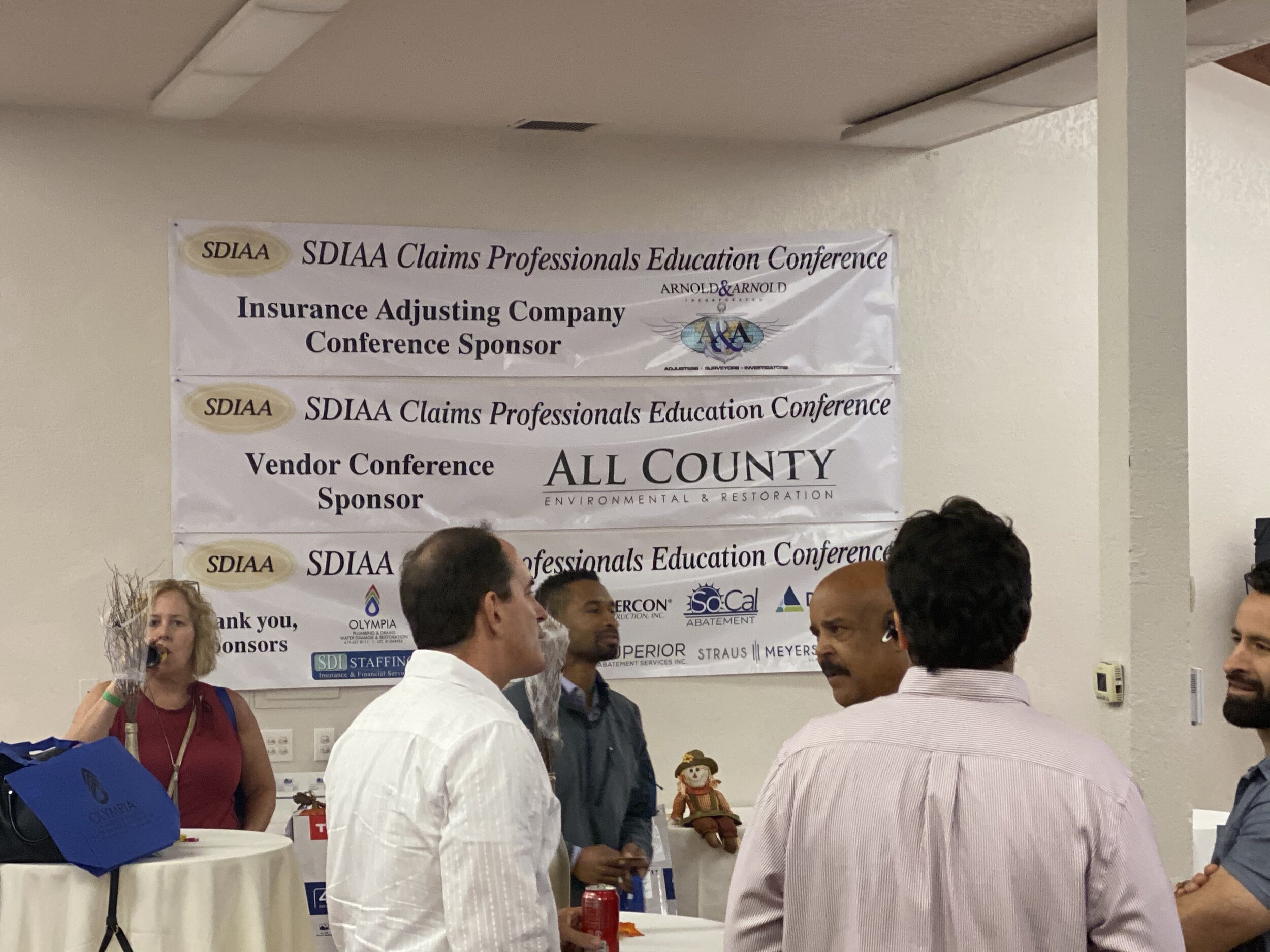
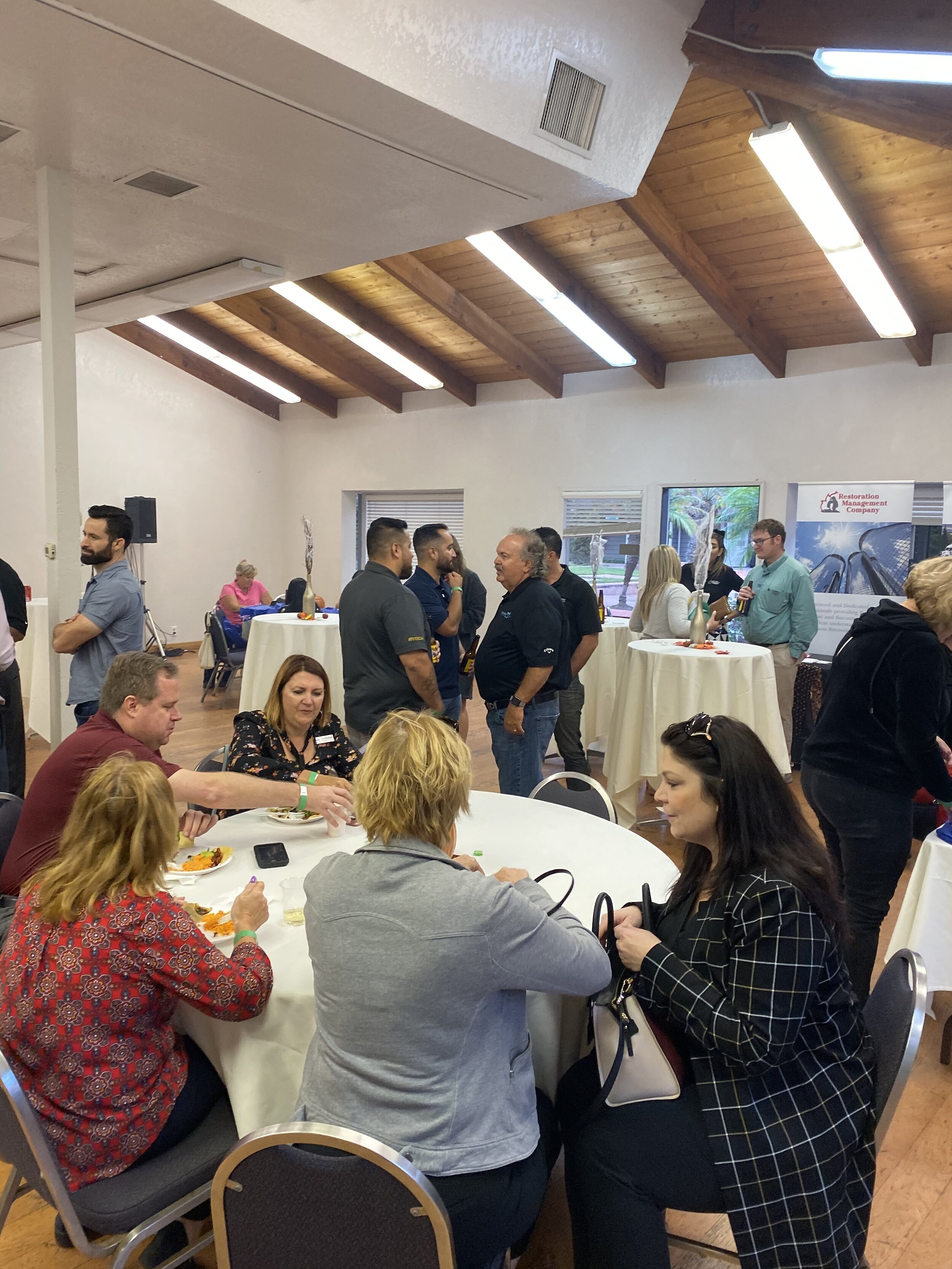
On October 18, 2019, Straus Meyers, LLP attorneys spoke at the SDIAA’s 2019 Annual Claims Professional Education Conference on the topic of “The Bad Faith Setup” and how insurers can avoid the pitfalls of bad faith allegations in this complex area with potentially millions of dollars on the line. This two-hour presentation was well attended and led to interesting discussions across the room. We greatly appreciate the opportunity to present and are equally proud to have sponsored the event.


Bad Faith Claim Disintegrates Into Mutual Walk-Away
Straus Meyers, LLP, did not allow plaintiff to realize this strategy on this occasion. Straus Meyers, LLP successfully moved to strike three times successive amended complaints, each time removing punitive damages language, until the court granted its third and last motion to strike without leave to amend. Concurrently, while aggressively undertaking this and other motion work, Straus Meyers, LLP, continued to vigorously investigate the facts until it located, and then deposed, new witnesses, which until then had been elusive, and whose whereabouts plaintiff had conveniently failed to disclose. The testimony of these witnesses would eventually completely undermine the plaintiff’s attempts to portray the insurance company’s behavior in a bad light, and provided the necessary material for an Insurance Code Section 1871.7 counter-claim against plaintiff for insurance fraud, which, as trial approached, ultimately resulted in plaintiff dropping his earlier six-figure settlement demand to….zero.
“Bad faith” is all the rage these days at the insurance plaintiff’s bar, as plaintiff’s attorneys continue to seek out creative means of attempting to transform the most innocent of adjuster errors into an occasion for making six or seven figure claims, plus Brandt (Brandt v. Superior Court (1985) 37 Cal.3d 813 [210 Cal. Rptr. 211, 693 P.2d 796) attorney’s fees!
Straus Meyers, LLP, did not allow plaintiff to realize this strategy on this occasion. Straus Meyers, LLP successfully moved to strike three times successive amended complaints, each time removing punitive damages language, until the court granted its third and last motion to strike without leave to amend. Concurrently, while aggressively undertaking this and other motion work, Straus Meyers, LLP, continued to vigorously investigate the facts until it located, and then deposed, new witnesses, which until then had been elusive, and whose whereabouts plaintiff had conveniently failed to disclose. The testimony of these witnesses would eventually completely undermine the plaintiff’s attempts to portray the insurance company’s behavior in a bad light, and provided the necessary material for an Insurance Code Section 1871.7 counter-claim against plaintiff for insurance fraud, which, as trial approached, ultimately resulted in plaintiff dropping his earlier six-figure settlement demand to….zero.

July 2019 Defense Verdict
July 2019 - Straus Meyers, LLP is pleased to announce a defense verdict attained by trial attorney Chase Goodman. The verdict comes after Defendant offered a statutory offer to settle (CCP998 Offer) for a very reasonable sum. After not accepting the offer, Plaintiff failed to obtain a more favorable result at trial, specifically, $0.00 thereby entitling defendants to costs.
Products Liability / Brain Injury Defense Victory
August, 2019. Straus Meyers, LLP scored another victory for its clients in a products liability action involving claims of a traumatic brain injury occurring in Los Angeles County, California.
Straus Meyers, LLP scored another victory for its clients in a products liability action involving claims of a traumatic brain injury occurring in Los Angeles County, California. The matter, initially litigated in Los Angeles state court, was removed to Federal Court in Los Angeles. Straus Meyers, LLP filed a motion to dismiss pursuant to Federal Rule 12. After several amendments to the complaint and cross-complaint, as well as the later insertion of alter-ego theories, the Central District ultimately agreed with Straus Meyers, LLP’s arguments and dismissed its out-of-state corporate and individual clients on jurisdictional grounds.
Straus Meyers, LLP Welcomes Senior Litigation Associate Joshua Anaya
Straus Meyers, LLP is pleased to welcome new senior litigation associate Joshua C. Anaya to the firm. Josh brings a wealth of unique litigation experience to the firm. We are thrilled he has decided to join our team.
Another Defense Verdict for Straus Meyers, LLP in 2019
We are halfway into 2019 and Straus Meyers, LLP has scored another defense verdict. In the hours before trial, defense agreed to accept opposing counsel’s previous offer to settle. However, the offer was rejected and, in fact, met with an increased demand. Trial proceeded accordingly. Although liability was adverse and the “intoxicated” defendant was alleged to have intentionally struck plaintiff’s vehicle, the Court ultimately found in defendant’s favor. According to trial counsel Marvin Straus, not only is it important to understand all of your defenses, it is just as critical to understand plaintiff’s burden of proof and the necessary evidence required to meet that burden. A motion for judgment was timely made and ultimately granted pursuant to California Code of Civil Procedure, section 631.8.

SDIAA 2019 Golf Tournament
Straus Meyers, LLP is proud to be a hole sponsor for the 2019 SDIAA Golf Tournament happening on June 14, 2019 at the Rancho Bernardo Inn & Golf Course. Please stop by and say hello. We will be stocked up with food, drinks, and other helpful things. If you haven’t already signed up, please do so soon here.

Trial Update: The Power of California Code of Civil Procedure section 631.8
California Code of Civil Procedure (“CCP”) section 631.8 is a rarely used, but powerful trial tool, that provides, “after a party has completed his presentation of evidence in a trial by the court, the other party, without waiving his right to offer evidence in support of his defense or in rebuttal in the event the motion is not granted, may move for a judgment.” Additionally, this section allows a party to attack some but not all issues in the case, “[i]f it appears that the evidence presented supports the granting of the motion as to some but not all the issues involved in the action, the court shall grant the motion as to those issues and the action shall proceed as to the issues remaining.” This tool was recently utilized by partner Marvin Straus in a civil trial held in Los Angeles, California. After plaintiff presented his case, a motion for judgment was requested but rejected by the court. During cross-examination, the defense carefully balanced providing enough evidence as possible to attack the merits of Plaintiff’s claim, while at the same time being mindful that too much information would “open the door” to evidence that could undermine a later CCP 631.8 request. After the cross-examination of the Plaintiff, the defense asked the court again to be heard pursuant to CCP 631.8. The court granted Mr. Straus’ request to be heard. After oral argument, the court granted several motions including the outright dismissal with prejudice of one of the defendants, the dismissal of any and all claims for property damage, as well as, the dismissal of any claim for special damages. The motions made and results:
Motion for judgment to dismiss entire action against defendant. Granted.
Motion for judgment to dismiss property damage claims. Granted.
Motion for judgment to dismiss any award of medical specials. Granted.

Straus Meyers, LLP’s First Anniversary
It is with great pride that we are celebrating our one year anniversary. Exactly one year ago, May 7, 2018, Straus Meyers, LLP began operation. While the firm has been formally in existence for only a relatively short amount time, the combined experience of our attorneys and support staff is overwhelming. In a short amount of time, we believe we have assembled an exemplary team unmatched in the legal industry in legal knowledge, work ethic, pride in work, and can-do attitude. We wish to thank all of our supporting clients and colleagues. Some of the accomplishments we are so proud of include:
We have proven the ability to handle small cases, not so small cases, and major cases with equivalent detail to each without sacrificing quality, no matter the budget.
We are lean, relying on the best the IT industry has to offer the legal field, to reduce overall operational costs, which allows us to pass savings to our clients.
We have clients that consistently report we are their “go to” legal counsel for California despite panels of other attorneys within California.
We have taken a multitude of cases to trial in 2018 and early 2019 and delivered amazing results, not just promises. In doing so, our clients continue to trust our firm with their legal work.
We have assembled a cohesive team that works together, builds on one another’s strengths, and enjoys working together.
We have grown. Since starting on May 7, 2018, we have added three additional attorneys, two paralegals, two file clerks, additional administrative staff. Such growth is not unheard of in the legal industry, but maintaining that growth is. We continue to grow because our clients continue to see the value of our services and dedication to their matters.
We are always learning. Our attorneys believe the practice of law is just that. Practice necessarily requires repetition and learning new skills. We frequently attend insurance conferences, attorney seminars, and review weekly case developments-this practice helps us keep ahead of the competition, on both sides.
We are accessible and always will be. No matter what our size, we promise to remain accessible to our clients. We believe regular and accessible client communication is critical to superior legal representation. In addition, we love meeting our clients and if we have not met you yet in your hometown, look forward to doing so in the next year.
We value long term client relationships. It is our goal to remain our clients’ legal counsel indefinitely. To do this, we closely review clients’ comments, be them positive or negative, in order to be better. If something is not right, we will make it right if it’s within our power to do so.
We are grateful to all those who supported our new venture and continue to do so. We look forward to many years to come. If you have not already joined us, we invite you to take a look at our firm and our team of heard working attorneys, paralegals, and amazing support staff!
Sincerely,
Andrew Meyers & Marvin Straus

General Damages Defense Result
Shortly before trial, Straus Meyers, LLP was substituted in as trial counsel for a “T-bone” automobile accident occurring in a Los Angeles intersection. The lawsuit was filed and tried in the Los Angeles courts. Liability was admitted. Plaintiff underwent two spine surgeries and required two additional spine surgeries. The necessity for four spine surgeries was attributed to the accident.
Plaintiff claimed a rupture at one level of his cervical intervertebral disc. Plaintiff received a total of five epidural injections in the lumbar spine. The need and accident-related-causation for lower back surgery was recommended and confirmed by plaintiff and defense experts. Plaintiff required a future cervical spine surgery at an adjacent level. Plaintiff underwent initial therapy for the cervical spine including pain medication and physical therapy. Plaintiff underwent disc replacement surgery on his neck. Plaintiff later had a subsequent foraminotomy spine surgery. At trial, Plaintiff demanded over $15,000,000. The total jury award was $858,456.

Punitive Damages Kicked from Plaintiff’s Bad Faith Complaint
Straus Meyers, LLP recently prevailed in defending a bad faith complaint in what amounted to three attempts by plaintiff to amend plaintiff’s complaint. The first-party-insured-plaintiff alleged breach of contract and bad faith against its insurer for its failure to pay on a claim in which the insured claimed his vehicle was stolen. Each of the five (5) versions of plaintiff’s complaint contained a prayer and other language supporting punitive damages. We moved to strike punitive damages from three successive complaints. The court granted the first two motions with leave to amend. After the most recent motion to strike, the court granted the motion to strike without leave to amend. The court agreed that plaintiff did not successfully plead corporate ratification under CA Civil Code Section 3294(b). In previous complaints, plaintiff plead that an adjuster denied the claim. The court found that plaintiff’s attempts and suggestions for amending its pleading to state that the adjuster had discretion to dispose of the claim, and was therefore a managing agent of the insurance company under the case Major v. Western Home Insurance Co. (2009) 169 Ca.App.4th 1197, would be a sham in view of its previous allegations that a supervisor, not an adjuster, had discretion to dispose of the claim.
Massive Defense Victory for Straus Meyers, LLP
Straus Meyers, LLP proudly announces a significant defense result in the San Diego Superior Court. Following a lengthy and heavily contested two and a half week jury trial involving claimed FEHA violations, sexual harassment, and wrongful termination, the jury returned a verdict awarding minimal monetary damages against Defendant despite Plaintiff’s multi-million dollar request of the jury. Even more impressive, the court awarded defense costs and denied Plaintiff her costs.

Anti-Fraud Alliance - 30th Annual Anti-Fraud Conference
We just returned from the AFA’s 30TH ANNUAL ANTI-FRAUD CONFERENCE and congratulate the conference’s organizers. Excellent all around. With the help of AFA and others, Straus Meyers, LLP remains on the cutting edge of insurance fraud fighting. We look forward to attending the conference next year.

Welcoming Nancy Fournier
Straus Meyers, LLP is pleased to welcome Nancy Fournier to the firm. Nancy brings a wealth of law firm experience to our administration team. We are excited to have her on board.